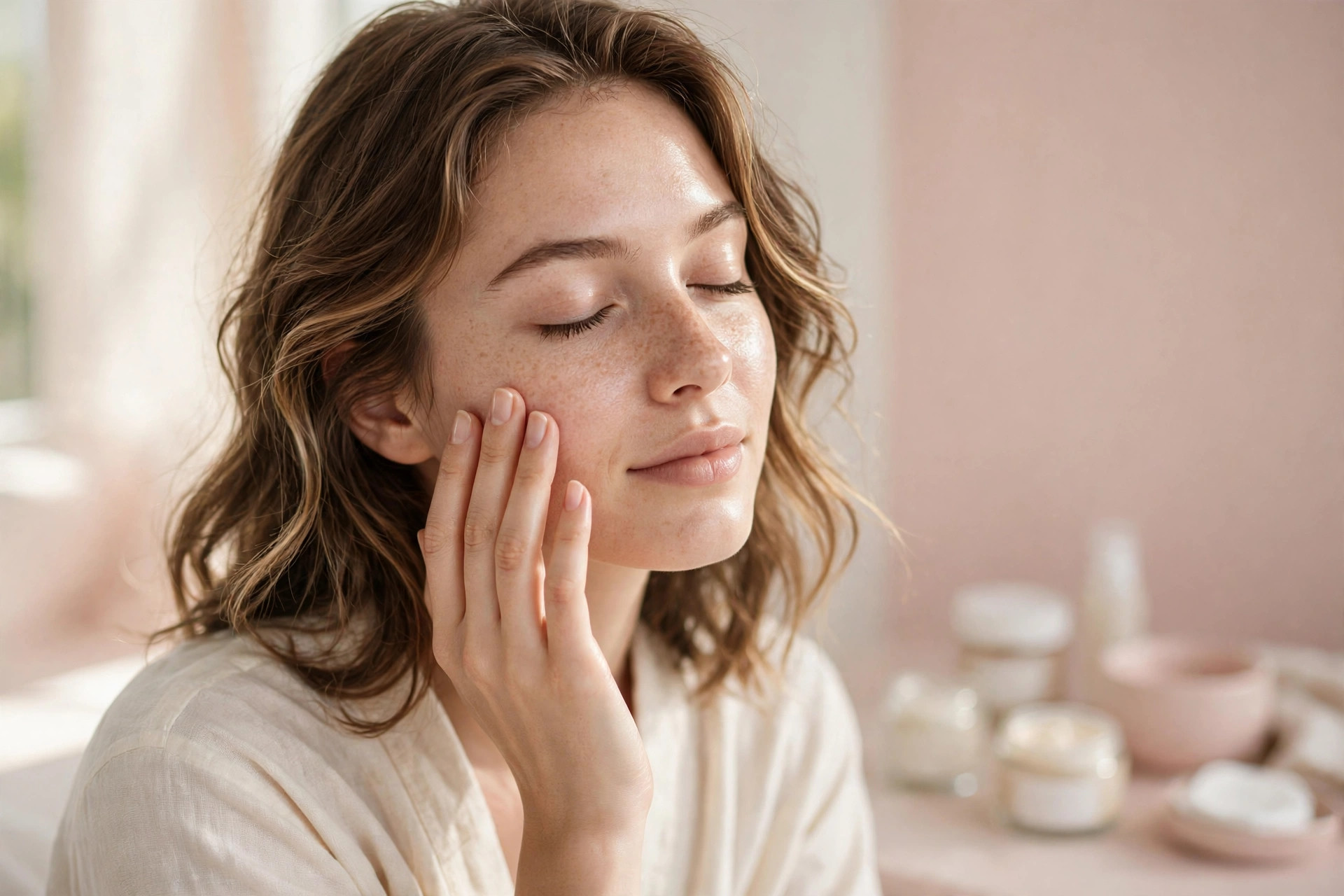
Gua sha is a centuries-old practice that TikTok rediscovered — and for once, the hype is mostly pointed in the right direction. The tool is simple, the technique is learnable in an evening, and the depuffing effect is real. What it won't do is reshape your bone structure. Here's the honest beginner's briefing: the tools worth buying, the strokes that matter, and the mistakes everyone makes at first.
What gua sha actually does
Gua sha is manual lymphatic drainage with a smooth-edged tool. Light, directional strokes encourage pooled fluid to move toward the lymph nodes near your ears and down the sides of your neck. The visible result: less morning puffiness, more defined-looking cheekbones and jawline — for a few hours. It also just feels good, which is why people stick with it. It does not: dissolve fat, move bone, or permanently slim your face. Anyone promising that is selling something.
The technique basics (the 80/20)
- Always use slip. Facial oil or a slick serum — never drag a stone across dry skin. This is the #1 beginner mistake.
- Light pressure. Think "moving fluid," not "scraping." If you're pressing hard enough to hurt or bruise, you're doing it wrong.
- Direction matters. Strokes go outward and upward on the face (chin → ear, nose → temple), then down the sides of the neck to drain. Each stroke 5–10 times.
- Flat-ish angle. Hold the stone at roughly 15 degrees to the skin, not perpendicular — the edge should glide, not dig.
- Five minutes is plenty. Consistency beats duration. A short daily routine outperforms a monthly 30-minute session.
Tools tested
1. Classic wing/heart-shaped stone — around $8–$12 Best for beginners
The standard beginner tool: curved edges for cheeks and jaw, a notched edge for the jawline, a pointed tip for pressure points. Rose quartz, jade, or aventurine — the stone type is aesthetic preference, not performance. Best for: every beginner. Start here. Watch out: cheap stones can have rough, unfinished edges — run your finger along every edge before buying; it should be glass-smooth.
- ✓The standard beginner tool — every edge has a job
- ✓Cheapest way to start; stone type is aesthetic, so buy on edge quality
- ✓A well-finished $10 stone performs identically to a $60 one
- ✗Cheap stones can have rough, unfinished edges — run your finger along every edge before buying
Our verdict: Start here. A well-finished $10 stone is all any beginner needs.
Best for: every beginner. Start here.
Not ideal for: under-eye precision work — the mushroom shape suits that better.
2. Stainless steel gua sha — around $12–$18 Best overall
Same shapes in polished steel. Naturally cool (no fridge needed), unbreakable, and easy to sanitize — a practical upgrade over stone. Best for: people who drop things, and anyone who likes the cooling effect without pre-chilling. Watch out: heavier than stone; go easy on pressure around the eyes.
- ✓Naturally cool without pre-chilling
- ✓Unbreakable and easy to sanitize — a practical daily-driver upgrade over stone
- ✗Heavier than stone; go easy on pressure around the eyes
Our verdict: The practical upgrade — all the function of stone, none of the fragility, with built-in cooling.
Best for: people who drop things, and anyone who likes the cooling effect without pre-chilling.
Not ideal for: stone purists — if the ritual matters, stay with rose quartz.
3. Gua sha + roller set — around $15–$25 Best gift pick
The gift-set format: a stone plus a facial roller in a box. Fine value if the stone edges are well finished — the roller is a bonus, not the main event. Best for: trying both techniques cheaply. Watch out: sets optimize for looks over edge quality; inspect before committing.
- ✓Fine value for trying both techniques cheaply
- ✓Giftable presentation
- ✗Sets optimize for looks over edge quality — inspect the stone edges before committing
Our verdict: Buy it to try both formats or to gift — but judge the stone edges, not the box.
Best for: trying both techniques cheaply.
Not ideal for: anyone serious about technique — a standalone well-finished stone beats a pretty set.
4. Mushroom-shaped gua sha — around $10–$15 Best for under-eyes
A rounded, palm-friendly shape designed for cheeks and under-eyes. Easier to hold at the right angle than the classic wing shape. Best for: under-eye work and anyone who finds the classic shape awkward. Watch out: less versatile — you'll still want a classic shape for the jawline.
- ✓Easier to hold at the right angle than the classic wing shape
- ✓Great fit for under-eyes and cheeks
- ✗Less versatile — you’ll still want a classic shape for the jawline
Our verdict: The easy-hold specialist for under-eyes — a good second tool, not the first.
Best for: under-eye work and anyone who finds the classic shape awkward.
Not ideal for: a one-tool collection — pair it with the classic shape.
How we test
We compare shapes, materials, and edge finishing using manufacturer specs and verified owner reviews, and weigh them against the technique that actually matters (light pressure, slip, direction). We don’t run a lab or accept free products for placement.
Frequently asked questions
How often should I do gua sha?
Daily or every other day, 3–5 minutes. More isn't better — overdoing it irritates skin, especially with too much pressure.
Can gua sha cause breakouts?
It can if the tool or your hands aren't clean, or if you're pushing oil and debris around on acne-prone skin. Wash the tool with soap after each use, and skip active breakouts — don't drag over inflamed acne.
Do I need the expensive jade or bian stone versions?
No. A well-finished $10 stone performs identically to a $60 one. Pay for edge smoothness and shape, not the mineral name.