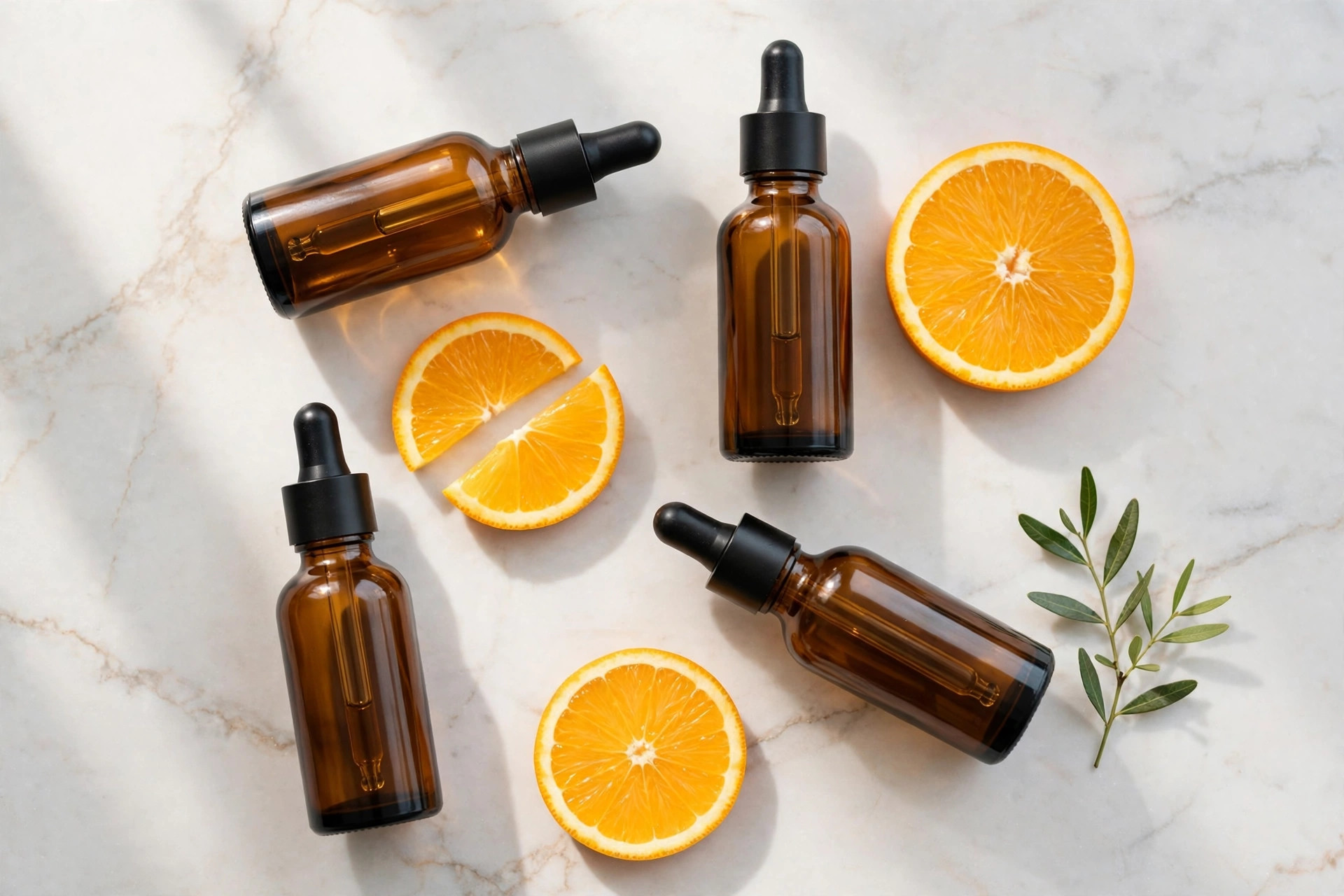
Vitamin C is the rare skincare ingredient with the evidence to back the hype: it supports collagen, fades dark spots, and defends against the environmental damage sunscreen alone can't catch. But the category is a minefield of oxidized bottles, mystery concentrations, and derivatives that sound the same and behave differently. A serum that arrives dark orange is already spent. Here are the six worth buying, by skin type and budget, with the honest trade-offs — and the storage rules that decide whether your bottle works to the last drop.
What makes a vitamin C serum work
Two things: the form of vitamin C, and whether it survives the bottle. L-ascorbic acid is the pure, most-studied form — the one behind the brightening and collagen evidence — but it is unstable: light, air, and heat turn it from clear to yellow to brown, and once it darkens, the potency is gone. Derivatives like sodium ascorbyl phosphate (SAP) and magnesium ascorbyl phosphate trade a little potency for stability and gentleness, which is why sensitive-skin formulas use them. The sweet spot for L-ascorbic acid is 10–20%: below 10% the effect fades, above 20% irritation climbs without much added benefit. And the supporting cast matters — vitamin E and ferulic acid stabilize the C and roughly double its photoprotection, which is why the best formulas pair all three. The trade-off to know: a cheap pure-C serum in a clear bottle is a race against oxidation you will usually lose. Packaging is part of the product.
How to read the label
Check the form first: "L-ascorbic acid" means pure C; "sodium ascorbyl phosphate" or "ascorbyl glucoside" means a gentler derivative — pick the form that matches your skin, not the trendiest name. Check the percentage: 10–20% for L-ascorbic acid is the evidence-backed range; a derivative formula won't list a comparable number, so judge it on reviews and gentleness instead. Check the bottle: dark amber glass or an opaque airless pump beats a clear dropper every time. Check the color on arrival: a fresh serum is clear to pale straw; if it arrives yellow-orange or brown, send it back — it oxidized in transit or storage. Storage: cool, dark, capped tight, and used within about three months of opening; the fridge helps, but a bathroom cabinet away from the shower steam is fine.
Serums worth buying
1. 20% vitamin C + E ferulic acid serum — around $25–$30 Best overall
The best value in pure vitamin C (Timeless 20% Vitamin C + E Ferulic): the full 20% L-ascorbic acid plus vitamin E and ferulic acid, in the same trio the luxury benchmark uses, at a sixth of the price. Best for: most skin types that tolerate pure C. Watch out: it comes in a clear bottle — store it in the dark and use it steadily, or it will oxidize faster than the opaque-packaged picks.
- ✓The proven trio at a fair price — the value pick in pure C
- ✓20% concentration sits at the top of the evidence-backed range
- ✗Clear bottle oxidizes faster — dark storage is not optional
Our verdict: The default recommendation — the luxury formula's chemistry without the luxury price.
Best for: most skin types that tolerate pure vitamin C.
Not ideal for: very sensitive skin — start with a derivative formula instead.
2. Gentle vitamin C serum with sodium ascorbyl phosphate — around $25–$34 Best for sensitive skin
A derivative-based serum built for skin that stings at pure C (Mad Hippie Vitamin C Serum): sodium ascorbyl phosphate plus vitamin E, ferulic acid, and hyaluronic acid, in a formula that rarely irritates. Best for: sensitive and reactive skin. Watch out: derivatives work more slowly than pure C — give it six to eight weeks before judging the brightening, not two.
- ✓Gentle enough for most reactive skin, with real brightening over time
- ✗Slower results than pure C — patience required
Our verdict: The sensitive-skin pick that doesn't punish you for having reactive skin.
Best for: sensitive and reactive skin.
Not ideal for: anyone wanting the fastest visible brightening — pure C works faster.
3. Affordable vitamin C serum with hyaluronic acid — around $15–$20 Best budget
The cheapest credible entry into the category (TruSkin Vitamin C Serum): a derivative-based formula with hyaluronic acid and vitamin E that hydrates while it brightens. Best for: budget buyers and first-timers. Watch out: the dropper bottle and low price mean oxidation risk — buy from a seller with fast turnover and check the color on arrival.
- ✓Lowest price of any pick here, without a quality cliff
- ✗Check the color on arrival — budget bottles oxidize faster in slow supply chains
Our verdict: The budget test-drive — try the category for under $20.
Best for: budget buyers and first-timers.
Not ideal for: anyone who wants a pure-C formula — this is derivative-based.
4. C E Ferulic antioxidant serum — around $166 Best luxury
The original that every other serum on this page is measured against (SkinCeuticals C E Ferulic): 15% L-ascorbic acid with vitamin E and ferulic acid, the patented combination with the deepest evidence base. Best for: anyone who wants the benchmark formula. Watch out: the price is real, and the 20% pick above gets you most of the way there for a sixth of the cost — buy this for the formula's track record, not for a dramatic difference in results.
- ✓The most-studied vitamin C formula in the category
- ✗About six times the price of the value pick for a modest edge
Our verdict: The benchmark — buy it if you want the original, not if you want the best value.
Best for: anyone who wants the original formula.
Not ideal for: budget buyers — the 20% value pick covers the same chemistry.
5. Drugstore vitamin C serum with hyaluronic acid — around $15–$20 Best drugstore
A pure-C drugstore option that gets the packaging right (CeraVe Vitamin C Serum): 10% L-ascorbic acid with hyaluronic acid, fragrance-free, in a protective tube that limits air exposure. Best for: drugstore shoppers and dry skin. Watch out: 10% is the gentle end of the pure-C range — effective, but slower than the 15–20% picks above.
- ✓Protective tube packaging slows oxidation; fragrance-free
- ✗10% is gentler but slower than the 15–20% picks
Our verdict: The drugstore pick that respects the chemistry — packaging included.
Best for: drugstore shoppers and dry skin.
Not ideal for: anyone chasing the fastest results — the higher-percentage picks work faster.
6. C15 vitamin C booster serum — around $49 Best for oily skin
A lightweight fluid built for skin that breaks out from heavier serums (Paula's Choice C15 Super Booster): 15% stabilized vitamin C with vitamin E and ferulic acid, in a thin texture that layers under moisturizer without pilling or shine. Best for: oily and acne-prone skin. Watch out: a booster is designed to mix into moisturizer or layer under it — used alone on very dry skin it can feel thin.
- ✓Thin, non-greasy fluid that suits oily and breakout-prone skin
- ✗Feels thin alone on very dry skin — layer it under a cream
Our verdict: The oily-skin pick — vitamin C without the heavy serum feel.
Best for: oily and acne-prone skin.
Not ideal for: very dry skin used alone — pair it with a moisturizer.
Who should skip vitamin C
- Very reactive skin that stings at everything: even derivatives can irritate a compromised barrier — repair the barrier first, then introduce a gentle derivative slowly.
- Anyone who won't wear sunscreen: vitamin C boosts photoprotection, it doesn't replace it — without daily SPF the brightening you gain is undone by the sun. Pair it with one of our Korean sunscreens or American-made sunscreens.
- Anyone mixing it with strong actives on the same night: vitamin C plus a high-strength retinoid or exfoliating acid in one routine is the fastest route to irritation — alternate days instead.
How we test
We compare vitamin C form, concentration, supporting antioxidants, and packaging using manufacturer specs and verified owner reviews across skin types. We don’t run a lab or accept free products for placement — and we weigh the daily-use reality honestly: the best serum is the one that stays potent until the bottle is empty.
Frequently asked questions
When should I apply vitamin C serum — morning or night?
Morning is the classic slot: vitamin C plus sunscreen gives better daytime photoprotection than either alone. Night works too if your mornings are crowded — consistency matters more than the hour. Apply it after cleansing, before moisturizer.
How do I know if my serum has gone bad?
Color. Fresh L-ascorbic acid serum is clear to pale straw; once it turns yellow-orange or brown, the vitamin C has oxidized and the potency is mostly gone. A derivative formula darkens less, so check the smell and the expiration date too.
Can I use vitamin C with retinol?
Yes, but not in the same application if your skin is sensitive — vitamin C in the morning and retinol at night is the standard split. Used together they can irritate, and the irritation undoes the benefit of both.
How long until I see brighter skin?
Most people see early brightening in two to four weeks with a pure-C formula, with dark-spot fading taking eight to twelve weeks. Derivative formulas run slower — judge them at eight weeks, not two.